
Aegean Coast Travel Guide
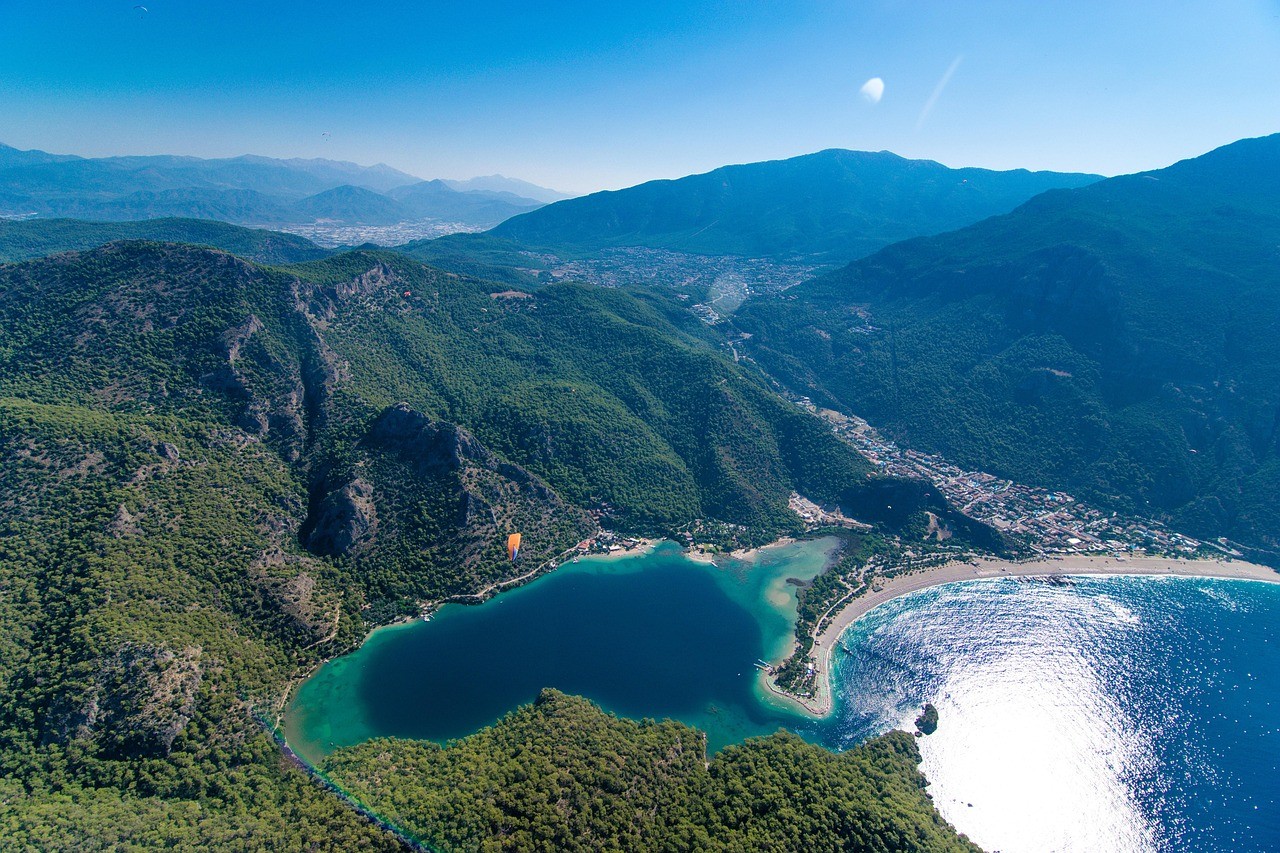
Türkiye’s Aegean coast stretches for more than 2,500 kilometres, from the Dardanelles in the north to the point where the Mediterranean begins near Marmaris. It is a coastline of extraordinary variety: ancient Greek and Roman cities, traditional fishing villages, olive groves and vineyards, and some of the bluest water in the world.
Ephesus
Ephesus (Efes) is one of the best-preserved ancient cities in the world and the most visited archaeological site in Türkiye. At its height it was the second largest city in the Roman Empire after Rome, with around 250,000 inhabitants.
Walking its marble-paved streets — past the Library of Celsus, the great theatre seating 25,000 spectators, the Temple of Hadrian and the terrace houses of the wealthy — is an immersive experience no museum can offer. Nearby, the Basilica of St John and the House of the Virgin Mary make this a place of pilgrimage of deep significance for Christians.
Pamukkale
Pamukkale means “Cotton Castle” in Turkish, and the name is well chosen. Hot springs rich in calcium carbonate have, over millennia, deposited dazzling white travertine terraces cascading down the hillside — one of the most unreal landscapes in Türkiye.
At the top of the terraces stands Hierapolis, an ancient spa town where the Romans came to take the waters. Its necropolis is one of the largest in Anatolia, and the well-preserved theatre looks out over the white landscape below.
A unique experience: the Antique Pool at Hierapolis, where you can swim among submerged Roman columns in naturally heated thermal water.
Bodrum
Bodrum (ancient Halicarnassus) is the most cosmopolitan town on Türkiye’s Aegean coast — a harbour town of white houses draped in bougainvillea, a lively marina, and the impressive Castle of St Peter, which today houses the Museum of Underwater Archaeology.
Bodrum is also the starting point for the blue cruises — multi-day voyages aboard wooden gulets along the coast, stopping in secluded bays that cannot be reached by road.
Didyma, Miletus and Priene
These three ancient cities are often visited together on a tour from Kuşadası:
Didyma — the site of one of the most important oracular temples of the ancient world, the Temple of Apollo
Miletus — a great commercial and intellectual city, birthplace of the world’s first philosophers
Priene — a hillside Hellenistic city with a beautiful and remarkably intact temple of Athena
Kuşadası and the Dilek Peninsula
Kuşadası is the main gateway to Ephesus and a busy cruise port. The nearby Dilek Peninsula National Park offers hiking trails through pine forests and superb, uncrowded beaches.
The blue cruise
The stretch of Aegean coast between Bodrum and Marmaris is known as the Turquoise Coast and is the classic territory of the blue cruise aboard a traditional wooden gulet. Days are spent at anchor in coves of crystal-clear water, swimming from the boat, and sleeping under the stars. It is one of the most peaceful ways to discover Türkiye.
Practical tips
Best time to visit: May–June and September–October. Summers are dry, hot and very busy at the major sites.
From Antalya: Kuşadası is about 4 hours’ drive north; Bodrum about 3 hours 30. Our From Cappadocia to the Aegean Coast covers the must-see sites.
What to wear: Comfortable shoes are essential for walking on the uneven stones of ancient sites. Sun protection is a must.
Respect: Many ancient sites are fragile — stay on the marked paths and do not touch or remove any artefact.
The Aegean coast deserves at least a week if you want to explore it properly. Combined with Antalya and Cappadocia, it makes one of the finest travel itineraries in the world.