
What to See and Do in Antalya
Antalya is the jewel of Türkiye’s Mediterranean coast — a city where ancient history meets crystal-clear water and spectacular mountain scenery. Whether you explore on your own or on a guided excursion, Antalya rewards every kind of traveller.
The old town: Kaleiçi
Begin your visit in Kaleiçi, Antalya’s historic heart. Wandering its cobbled lanes carries you through two thousand years of history. Hadrian’s Gate, a triumphal arch built in 130 AD to welcome the Roman Emperor, is one of the best-preserved monuments in the entire region.
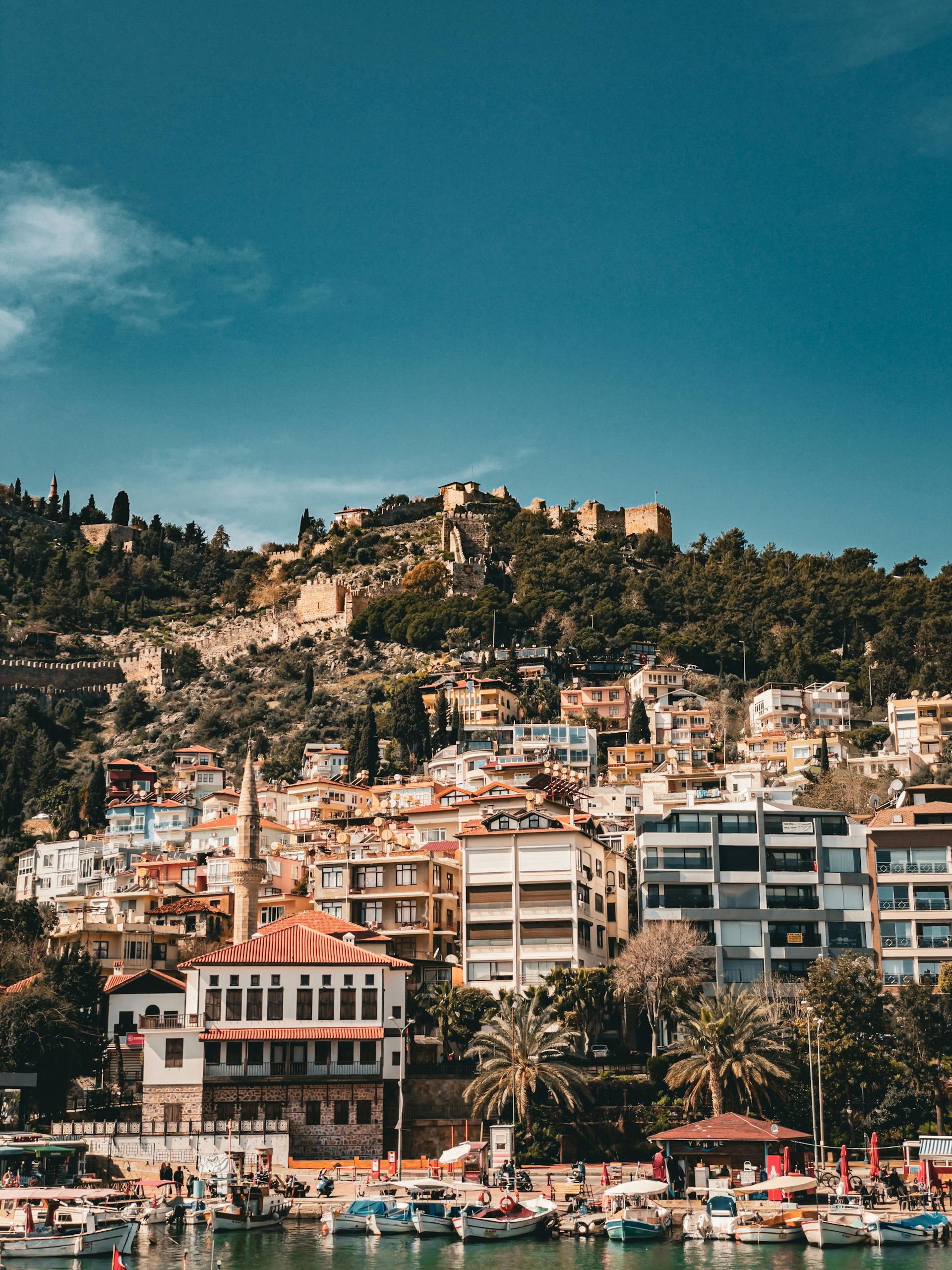
Just beyond the gate, the Hıdırlık Tower stands at the edge of the old harbour walls — an ideal spot to watch the sun set over the Mediterranean. The Roman harbour below is still in use today, now filled with wooden gulets offering day cruises.
The Antalya Museum
Do not miss the Antalya Museum, one of the finest archaeological museums in Türkiye. It holds an exceptional collection of artefacts from the nearby ancient cities — Perge, Aspendos and Xanthos — marble sculptures, sarcophagi, mosaics and everyday objects that bring the ancient world vividly back to life.
The Düden waterfalls
Just outside the city centre, the Upper Düden Waterfall pours into a shaded canyon — a refreshing escape from the summer heat. The Lower Düden Waterfall is more spectacular still: it plunges straight off a cliff into the sea, and is best seen from a boat.
Konyaaltı and Lara beaches
Antalya’s two main beaches could not be more different. Konyaaltı Beach is a long pebble shore framed by the Taurus Mountains, with the silhouette of the old town in the background. Lara Beach, to the east, is a wide stretch of golden sand popular with families.
Ancient sites nearby
Perge — a vast Hellenistic and Roman city with colonnaded streets, a stadium and a theatre
Aspendos — the best-preserved Roman theatre in the world, still used for performances today
Side — a peninsula city with twin temples of Apollo and Athena overlooking the sea
Termessos — a mountain fortress that even Alexander the Great could not conquer
Practical tips
Best time to visit: Spring (April–June) and autumn (September–November) for mild weather and fewer crowds. July and August are high season — hot and busy.
Getting around: Antalya has a tram line running through the city centre. Taxis and local minibuses (dolmuş) serve most of the sites.
Language: Turkish. English is widely spoken in tourist areas.
Currency: Turkish lira (TRY). Card payment is accepted almost everywhere.
For a guided experience of Antalya and the ancient sites around it, contact Yücel Taşyürek — a local expert who has been showing travellers the real Antalya for more than a decade.