
Guide de la cuisine turque
La cuisine turque est l'une des grandes traditions culinaires du monde — une synthèse des cuisines d'Asie centrale, du Moyen-Orient, méditerranéenne et ottomane, affinée au fil des siècles. Bien manger en Turquie ne demande presque aucun effort : les produits sont exceptionnels, les techniques sont ancestrales, et l'hospitalité fait que vous quitterez rarement une table le ventre vide.
Le petit-déjeuner
Un vrai petit-déjeuner turc (kahvaltı) est une affaire sérieuse. Même dans les foyers modestes ou les petits hôtels, la table sera garnie de :
Pain frais et simit (couronne de sésame)
Fromage blanc (beyaz peynir) et fromage jaune
Olives — noires et vertes
Tomates et concombres en tranches
Œufs à la coque ou menemen (œufs brouillés aux poivrons et tomates)
Miel, beurre et confiture de fruits
Sucuk (saucisse de bœuf épicée), pastırma (bœuf séché)
D'innombrables verres de thé noir
À Antalya et le long de la côte, le petit-déjeuner comprend souvent du jus d'orange fraîchement pressé à partir de fruits locaux.
La culture des mezze
La tradition turque des mezze est l'un de ses grands plaisirs. Dans un meyhane (taverne) traditionnel ou un restaurant de poisson, le repas commence par un défilé de petits plats froids :
Haydari — yaourt épais à l'ail et à l'aneth
Patlıcan salatası — salade d'aubergines grillées fumées
Taramasalata — crème d'œufs de poisson
Dolma — feuilles de vigne farcies au riz aux herbes
Cacık — yaourt au concombre et à la menthe (similaire au tzatziki)
Zeytinyağlı enginar — cœurs d'artichauts à l'huile d'olive
Ces plats sont suivis de mezze chauds (moules frites, halloumi grillé, boğaz köfte) puis du plat principal.
Les viandes grillées
La Turquie est un pays de viandes grillées extraordinaires :
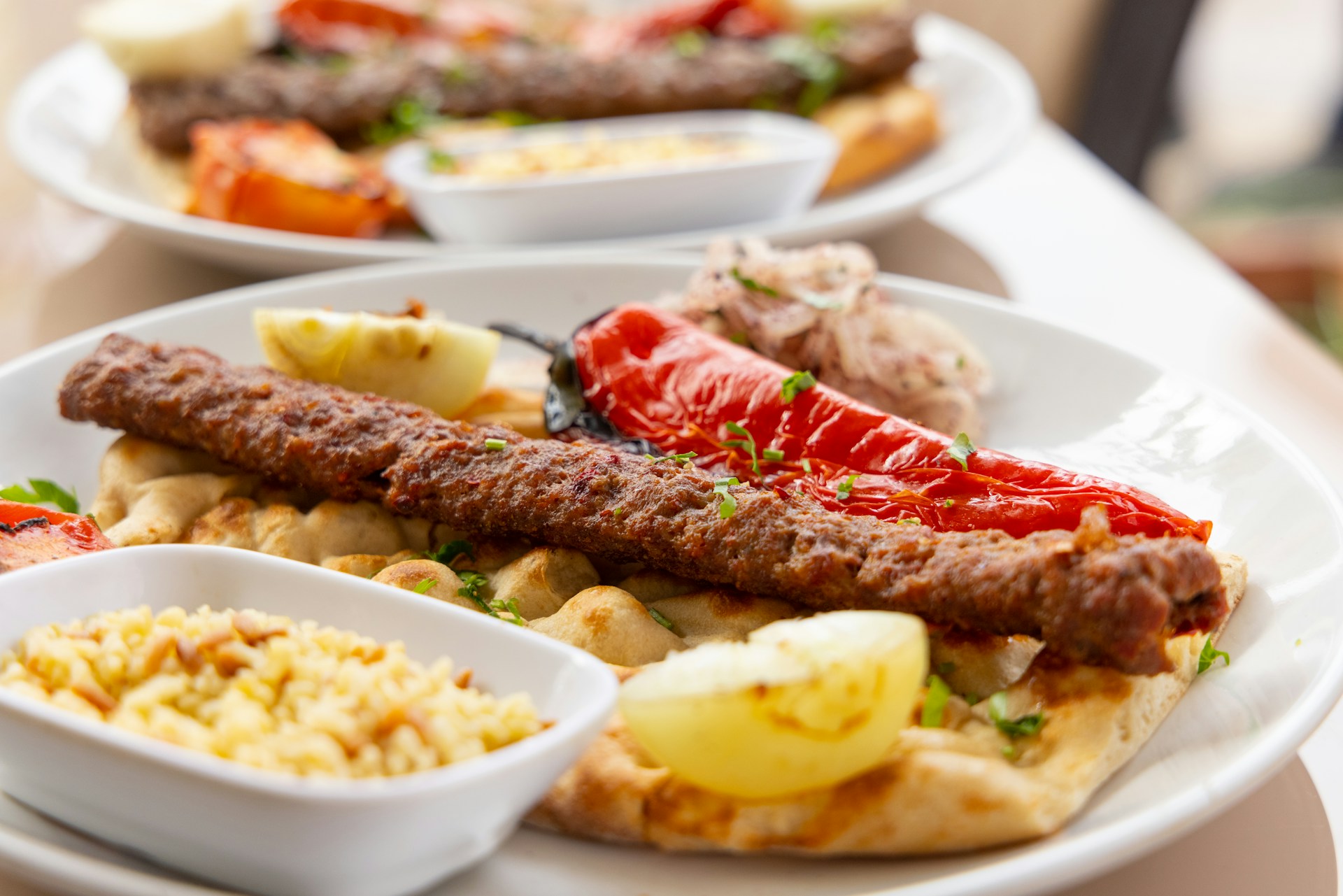
Adana kebab — agneau haché au piment fort, pressé sur une broche plate et grillé au charbon de bois
İskender kebab — tranches de döner d'agneau sur pain plat, nappées de sauce tomate et de beurre doré
Tandır — agneau cuit lentement dans un four en argile jusqu'à ce qu'il s'effeuille
Kuzu çevirme — agneau entier rôti à la broche, un classique des jours de fête
Pide — pain plat en forme de barque garni de viande hachée, de fromage ou d'œuf (parfois appelé pizza turque)
Les fruits de mer sur la côte
À Antalya et le long des côtes égéenne et méditerranéenne, les fruits de mer sont incontournables :
Levrek (bar) et çipura (daurade) grillés entiers
Karides (crevettes) au beurre à l'ail
Ahtapot (poulpe) grillé ou mariné à l'huile d'olive
Midye dolma — moules farcies au riz aux herbes, mangées directement dans leur coquille aux étals de rue
Hamsi — anchois frais, poêlés ou cuits au four avec du riz ; l'aliment emblématique de la côte de la mer Noire
Les soupes
Les soupes turques sont réconfortantes et nourrissantes :
Mercimek çorbası — soupe de lentilles rouges au cumin et au citron, consommée à toute heure de la journée
İşkembe çorbası — soupe de tripes, le remède traditionnel de fin de soirée
Tarhana — soupe séchée fermentée à base de blé, de yaourt et de légumes ; profondément réconfortante
Les sucreries et pâtisseries
La tradition sucrée ottomane est inégalée :
Baklava — couches de pâte extra-fine garnies de pistaches ou de noix, nappées de sirop. Le baklava de Gaziantep est considéré comme le meilleur du monde.
Lokum (loukoum) — dans toutes les saveurs, de la rose à la pistache en passant par la grenade
Künefe — pâtisserie de blé effiloché garnie de fromage non salé, imbibée de sirop et servie chaude avec de la crème épaisse
Sütlaç — riz au lait cuit au four jusqu'à ce que le dessus soit caramélisé
Dondurma — crème glacée turque à base de mastic et de salep, remarquablement élastique et dense
Les boissons
Çay (thé) — thé noir servi dans de petits verres en forme de tulipe, bu tout au long de la journée
Türk kahvesi (café turc) — épais, non filtré, servi avec un verre d'eau
Ayran — boisson froide au yaourt salé, l'accompagnement idéal des viandes grillées
Şerbet — sirops de fruits traditionnels dilués à l'eau, notamment à la rose et au tamarin
Rakı — spiritueux anisé, la boisson nationale turque, traditionnellement mélangé à de l'eau et de la glace et partagé avec des mezze
Manger à Antalya
La scène gastronomique d'Antalya associe la tradition des fruits de mer côtiers à la cuisine de viande rustique des montagnes du Taurus. Le vieux quartier de Kaleiçi abrite d'excellents restaurants dans des demeures ottomanes rénovées. Le front de mer est bordé de restaurants de poisson. Et pour l'expérience la plus authentique, trouvez un petit lokal familial (restaurant de quartier) loin des rues touristiques — votre guide saura exactement où aller.